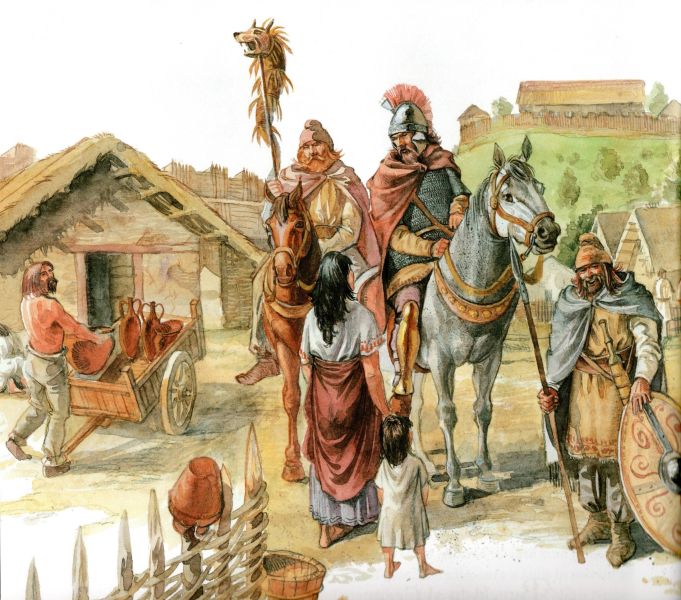
The Dacians, also called Getae, lived on the territory of today's Romania: Muntenia, Moldova, Banat, Transylvania, Maramureș. They were called by the great Greek historian Herodotus "the bravest and most righteous of the Thracians" . As for their names, there are several variants discussed by historians; some have adopted the name of Geto-Dacians or Dacians-Getae, so they consider them one people, while others claim that the Dacians and Getae were, in fact, two distinct ethnic groups, even their area of residence being different. Thus, the Dacians lived mainly in Transylvania, and the Getae on the Danube and in Dobrogea.
The Dacians were organized into states and had cities called dava . From agriculture they obtained: wheat, wine, honey, raised cattle and horses, but also fished. The clothing was made of sheep's wool and hemp. If on the plains the houses were made of twigs woven on poles and built with earth, on the hill and in the mountains they were made of wood, using closed beams. The king was the leader , assisted by a council of nobles, and was also advised by a priest. The Dacians were engaged in the extraction and processing of metals from which they made tools, weapons, objects of worship or furniture, ornaments, vessels and coins. The pottery was worked with both the hand and the potter's wheel and had become an art. Religious services were held in sanctuaries which were quadrilateral or circular in shape. The funeral ritual consisted of burning the dead, and the ashes were placed in urns and buried in the ground. The Dacians loved music. Ancient sources say that they sang vocally, but also played guitars.
The former capital of the Dacian kingdom, Sarmizegetusa Regia fortress is located in Grădiștea de Munte in Orăștioara commune, Hunedoara county. It is divided into 3 parts : the civil settlement located on the slopes of the hill, the fortress itself located in the highest area, at 1000 meters, and the sacred area. Placed on a land rich in iron ore, the fortress of Sarmizegetusa Regia enjoyed a fruitful economy, becoming in the first century AD one of the largest steel centers in all of temperate Europe.
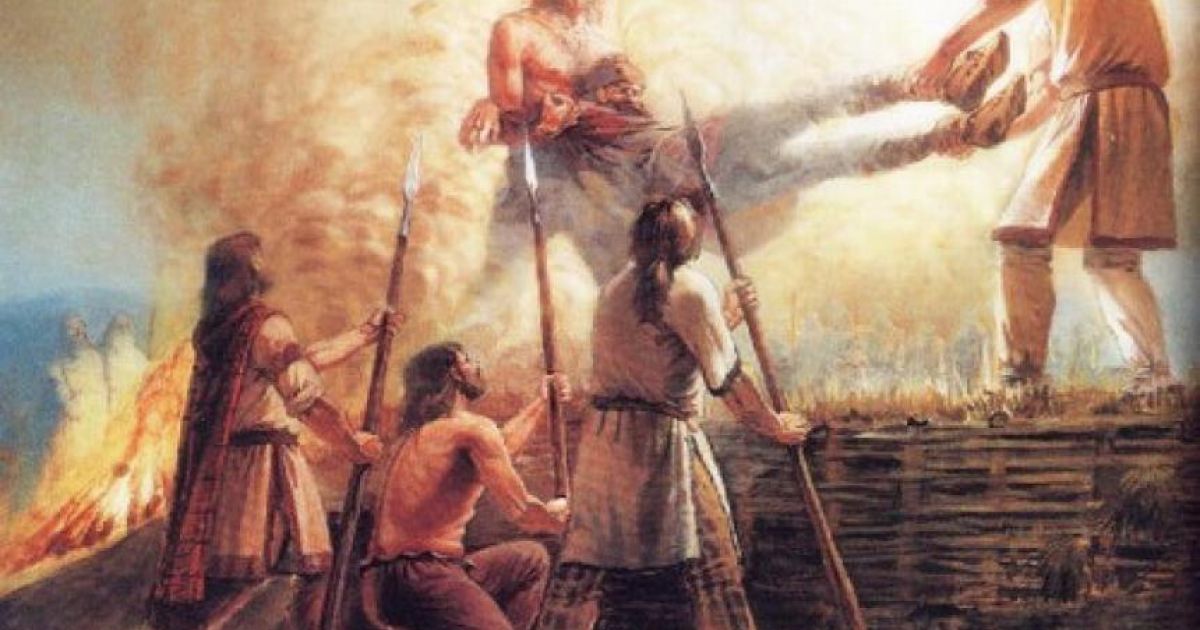
Zamolxis has gone down in history as the supreme god of the Dacians. His name was evoked by the historians of Antiquity, in the most diverse situations: either as a god, to whom our ancestors brought human sacrifices, or as a high priest from whom the Dacians learned not to be afraid of death. Zamolxis had an underground dwelling, was served by the Dacians, and other historians have reported that he was, in fact, a disciple of the sage Pythagoras . Zamolxis, considered the supreme deity of the Dacians, was one of the fabulous characters of Antiquity. Dacian god or great sage, prophet or slave, many controversies have been created around his name. Lycanthropy (A popular belief of Slavic origin that is found in many peoples, from Europe to SE Asia, his characters, including the desire to kill, according to dexonline.ro) comes from the Greek words lukos = wolf and anthropos = man and, most often, refers to the state of delirium in which a man thinks he has become a wolf.
General traditions and superstitions were substantially influenced by the Geto-Dacian cult of the wolf. The wolf was found on the banner of the Dacian flag - wolf's head, snake's body coiled on a spear, a symbol of the myth of the god Zamolxis (The Great Luminous Wolf). In Dacian myths, the wolf was associated with "savagery, boldness, disobedience, a symbol of sunlight, a warrior hero, a mythical ancestor", the "White Wolf" being the one who watches over and helps to the other realm ”.