Activity as a poet
In the 1980s, in Bucharest, at a time of great poetic effervescence, Matei Vișniec forged an immediately recognizable style. His poems are often philosophical fables. It was not by chance that the path from poetry to theatre was a natural one for Matei Vișniec because many of his poems contain in their embryo a conflict and a question, a challenge and a dilemma. The universe of the volumes of verse extends into plays and novels, in their extended symbolic-parabolic forms.
Poetry volumes
Tonight it will snow
In the volume Tonight it will snow, the poet proposes a perfectly distinct, singular formula: that of "absurd", Kafkaesque parables, sketched with an air of ingenuity, but essential is the character's perspective: "naive", always overtaken by events, he watches and describes, seeming not to understand much, with a pleasant, well-staged candour.
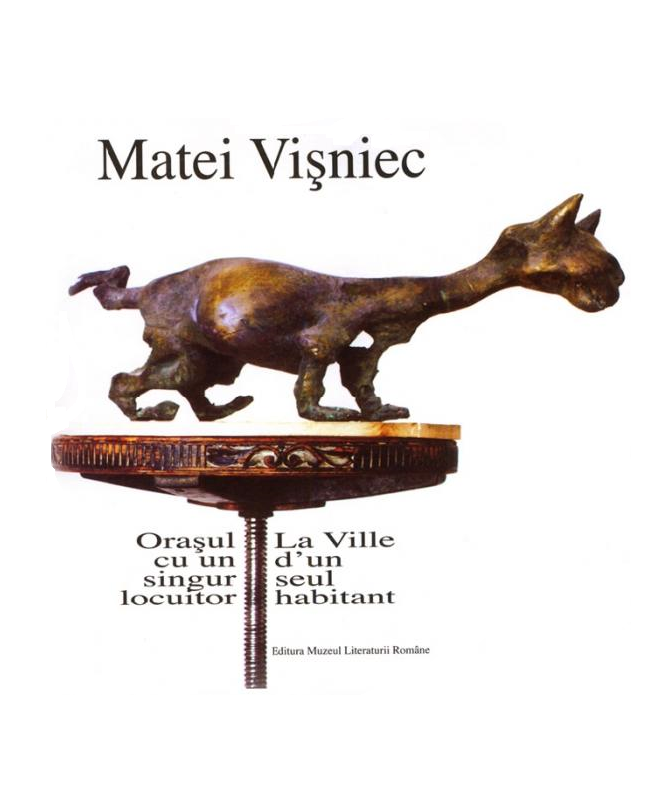
The town of one inhabitant
The scene is "the city", not, however, a city painted in realistic tones, but a strange, deserted one, reduced to its essential lines. The world seems to have lost its right to plurality, everything exists only in the singular: depending on the accent, the title can be read in two senses: it could be a city with only one inhabitant or a city with a single inhabitant.
Tea-time wise man
Discreet, sure of the originality of his manner, the poet allows himself greater freedom of movement, a sign of his awareness that his particular way of looking brings things, whatever they may be, to a common denominator. The poems are grotesque or absurd little stories, prosaic on the surface but graceful in substance, finely cut.
Subsequent poems
The collection of Later Poems is dated in the subtitle "1987-1999". The first date is the year of emigration, so the texts also follow the first three plates and the author's settlement in France. The parabolic formula is also repeated in the verses, without any sign of pride in novelty, on the contrary: Vișniec provides us with his notebook of poetic exercises, remake-u
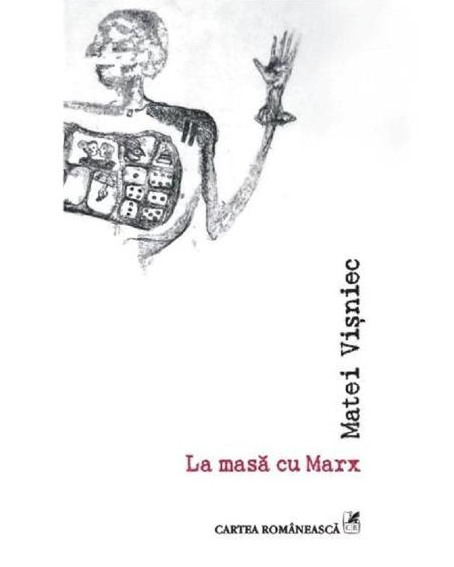
A Table with Marx
It has the same look and feel of a notebook of poetic piano-playing, but less heteroclite than the previous volume. It's a more flowing, evenly paced book, written with the stylistic maturity of the widely acclaimed poet-playwright. Of particular interest is the title poem, At Table with Marx. This is precisely what its four main sequences are about: food, ravenous, animalistic eating, a grotesque materialism from which the narrator-character will begin to recoil, distancing himself from Marx, Engels, Lenin and Stalin with whom he realises he should not have sat at the table.
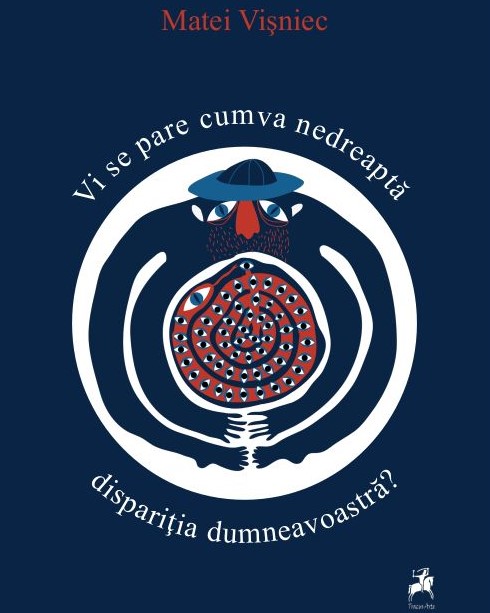
Does your disappearance seem unfair to you?
Matei Vișniec's latest volume follows the same poetic pattern of his previous volumes but here, more than in any other, it is imbued with the certainty and autonomy of literary maturity. Some poems are taken from his last novel, The Merchant of the Beginnings of a Novel, representing the monologue addressed to Miss Ri. Again, Matei Vișniec interconnects not only literary genres but also his works.