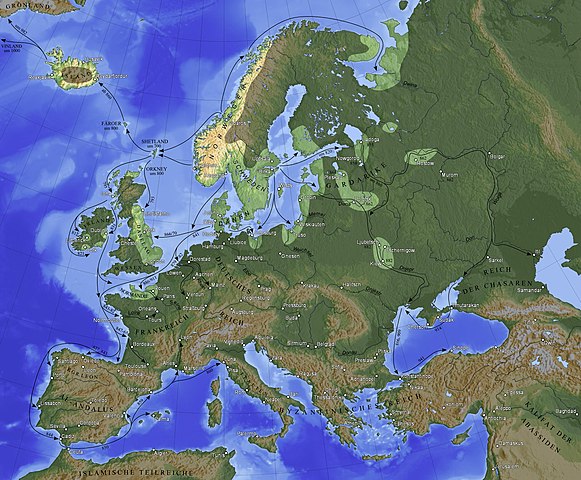
From the middle of the ninth century, Ireland, Scotland and England became major targets for the Vikings.
The Vikings took control of the islands of northern Scotland, the Hebrides and much of mainland Scotland. They founded the first trading cities in Ireland: Dublin, Waterford, Wexford, Wicklow and Limerick, and used their base on the Irish coast to launch attacks in Ireland and England, but even in France, although a massive fortification. they made England the favorite target of these invaders.
The first attack of the Vikings, which opened their era, took place in 793 AD at the monastery of Lindisfarne, in the north-east of England, when the Vikings massacred the monks there and burned the monastery to its foundations. In 795, the monastic communities on the Irish islands of Ioana and Rathlin suffered the same fate. The situation had become so serious that the monks had come to pray to God that there would be a storm so that the Norse could not sail.
In the wave of Viking attacks in England after 851, only one kingdom - Wessex - was able to withstand success. The Viking armies (mostly Danish) conquered East Anglia and Northumberland and dismembered Mercia.
Leaving Wessex, the Danes settled in the north, in an area known as "Danelaw". Many of them became farmers and traders and settled in York, as a leading trading city. In the first half of the 10th century, English armies led by Alfred of Wessex began to reclaim the Scandinavian areas of England, the last Scandinavian king, Erik Bloodaxe, being expelled and killed in 952, uniting the seven English kingdoms into one kingdom.
As I mentioned earlier, France was also a target for the Vikings.
After the death of Louis the Pious, the Frankish emperor, in 840, his son Lothar I sought the support of a Viking fleet in the power struggle he waged against his brothers.
The Vikings realized that the Frankish nobles were willing to pay them considerable sums to prevent them from attacking them, making their lands an irresistible target for Nordic raids.
They also threatened the Carolingian Empire, which was relatively strong in the last years of the reign of Charlemagne, but after his death the power of the empire waned and the Vikings plundered the empire at will. Thus, in 830, the town of Dorestad was looted three times.
However, the nature of Viking involvement outside of Scandinavia began to change in the second half of the ninth century. In 850, King Charles II of France gave a piece of land in northeastern France to a group of Vikings to settle there in exchange for military aid against his brother, Emperor Lothar. Due to events like this, the Vikings gained influence in the local battles and were encouraged to settle outside Scandinavia.
From then on, although they were still organizing raids and attacks, the Vikings became interested in establishing trade ties and gaining territory.
In 911, the Frankish emperor granted Rouen and the surrounding territories a treaty by a Viking chief named Rollo in exchange for peace and an end to the raids. This region in northern France is now known as Normandy, or "Nordic country."
Viking raids have spread to eastern Europe, including today's territories of Poland, the Baltic States, Russia, and Ukraine. They are known in this part of Europe as varegi and in Romania remained the name "baranga", derived from the term used in Greek. The Vikings contributed to the formation of Russia's first state formations.
They came to trade with the Arabs and the Eastern Roman Empire using the north-south waterways: the Dniester, the Dnieper and the Volga. They attacked Constantinople on the water several times but were repulsed.
They later fought as mercenaries for the Russian princes but also in the personal guard of the emperor of Constantinople. They also fought with the Romanians (blakumenn) in the battle of the Alta River in 1019.
Following an expedition to Constantinople, the Vikings left inscriptions and graphic representations on the small chalk church at Basarabi-Murfatlar in Dobrogea.
In the east, they have been known as Varangians since the 8th century, using methods similar to those of the Danes and their Norwegian counterparts in the west.
They created new trade routes south of the Volga and the Dnieper and founded city-states: Kiev and Novgorod. The Vikings also had extensive contacts with Constantinople, the military services of mercenaries of some of these feared Vikings being reputed and used in the Eastern Roman Empire, more precisely in the service of its emperor under the aforementioned Varangian guard, an elite military unit. .
In the ninth century, the Scandinavians (mainly Norwegians) began to colonize Iceland, an island in the North Atlantic, where no one settled in large numbers. By the 10th century, some Vikings (including the famous Erik the Red) moved even further west to Greenland. According to late Icelandic accounts, some of the first Viking settlers in Greenland (supposedly led by the Norwegian Leif Eriksson, son of Erik the Red), were the first Europeans to discover and explore North America.
They named the landing site Vinland (the land of wine or grapes), they built a temporary settlement L'Anse aux Meadows, now called Newfoundland. It seems that they did not form permanent settlements.
Viking raids in the 8th-10th centuries.
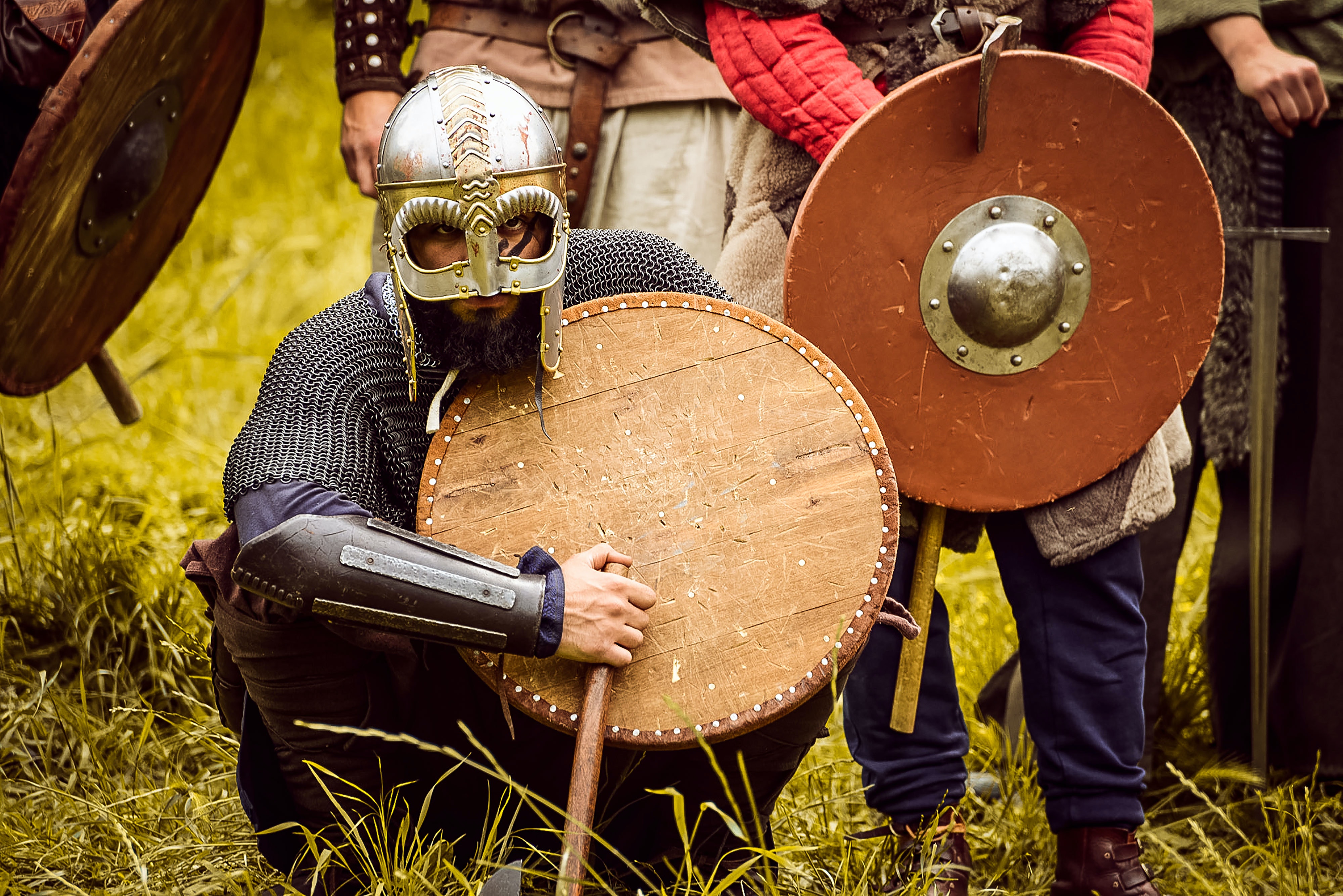
A recreation of a typical Viking armor
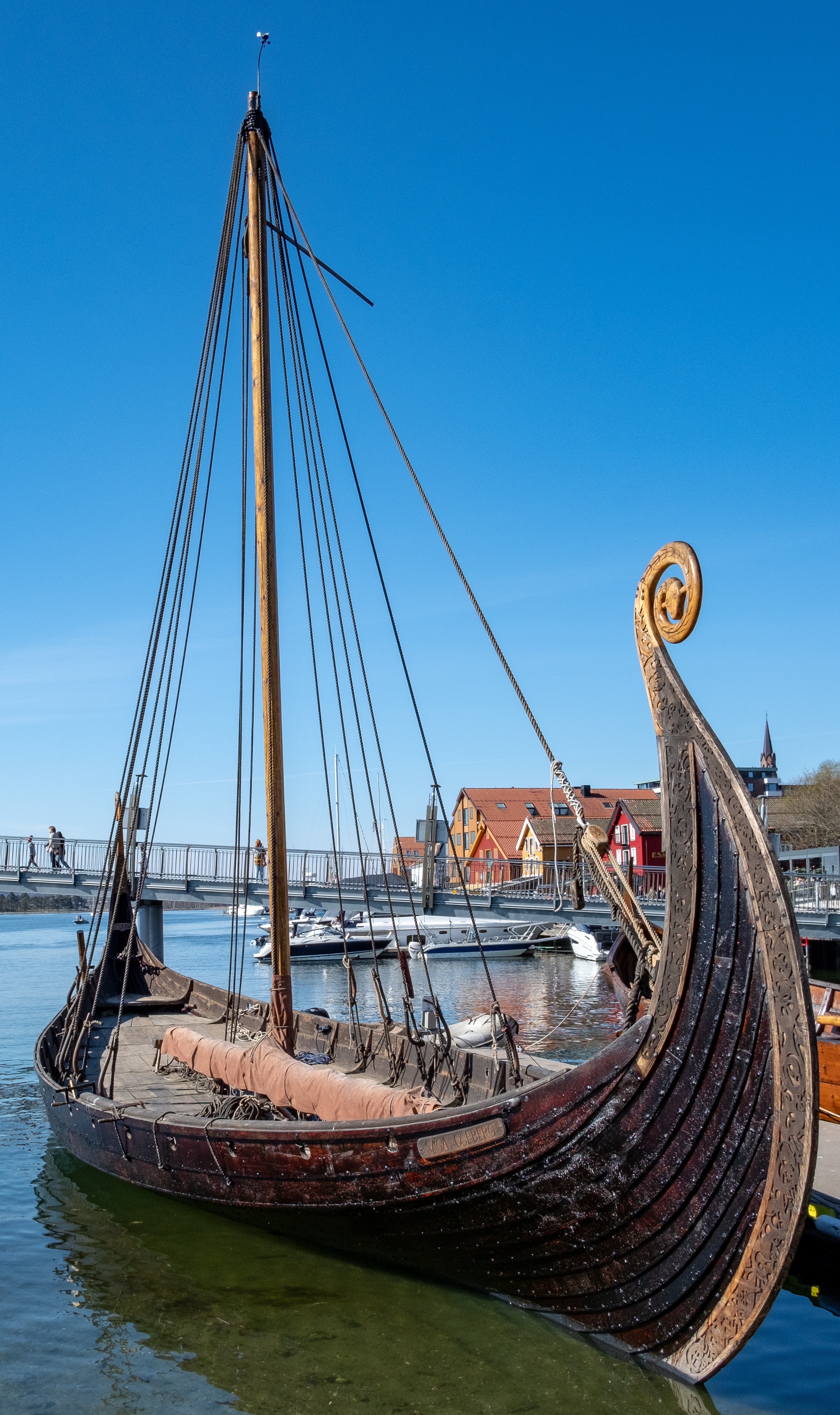
A model Viking ship
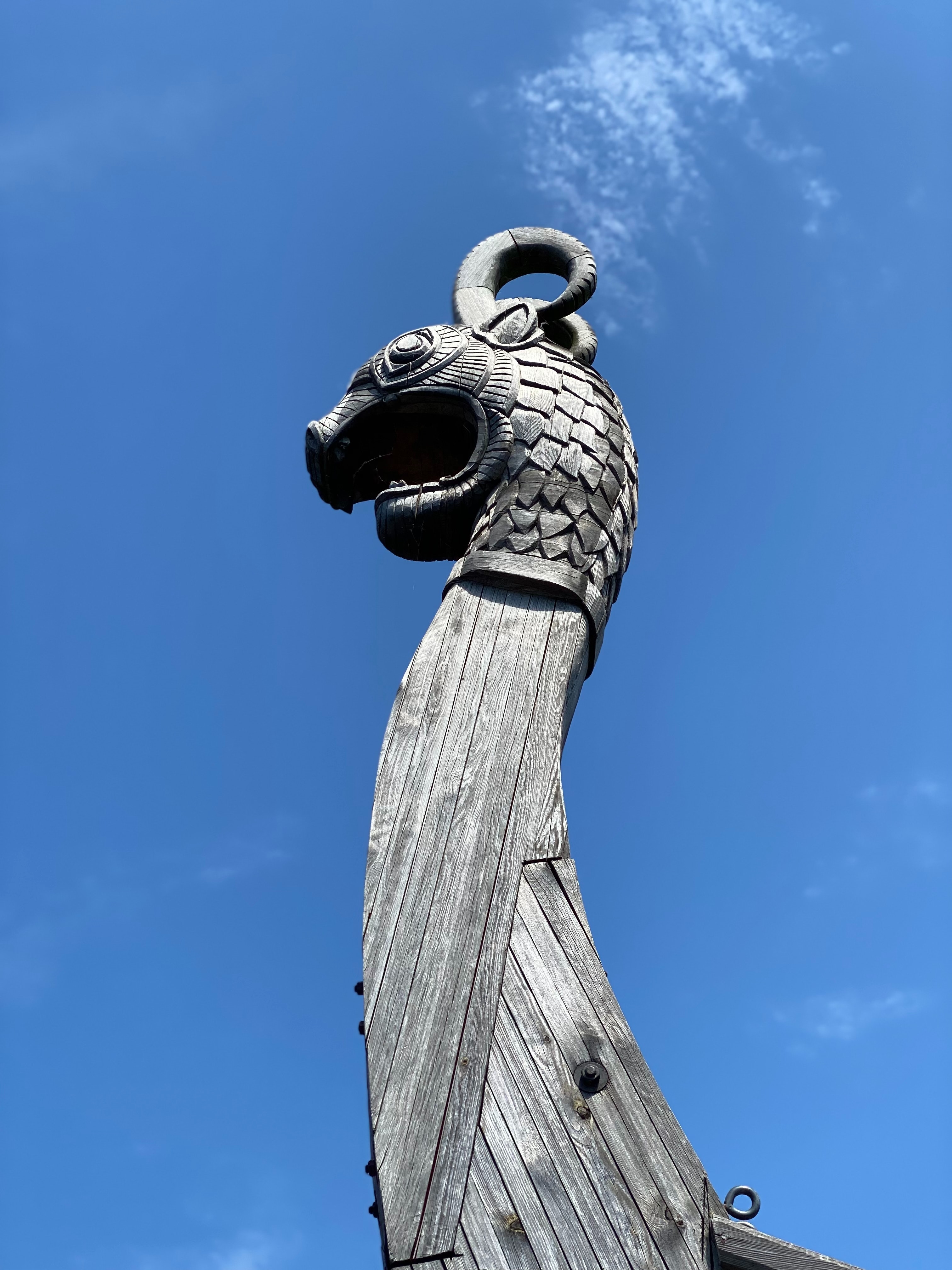
These decorations were placed on the head of the ship in order to scare the enemy and to please the gods
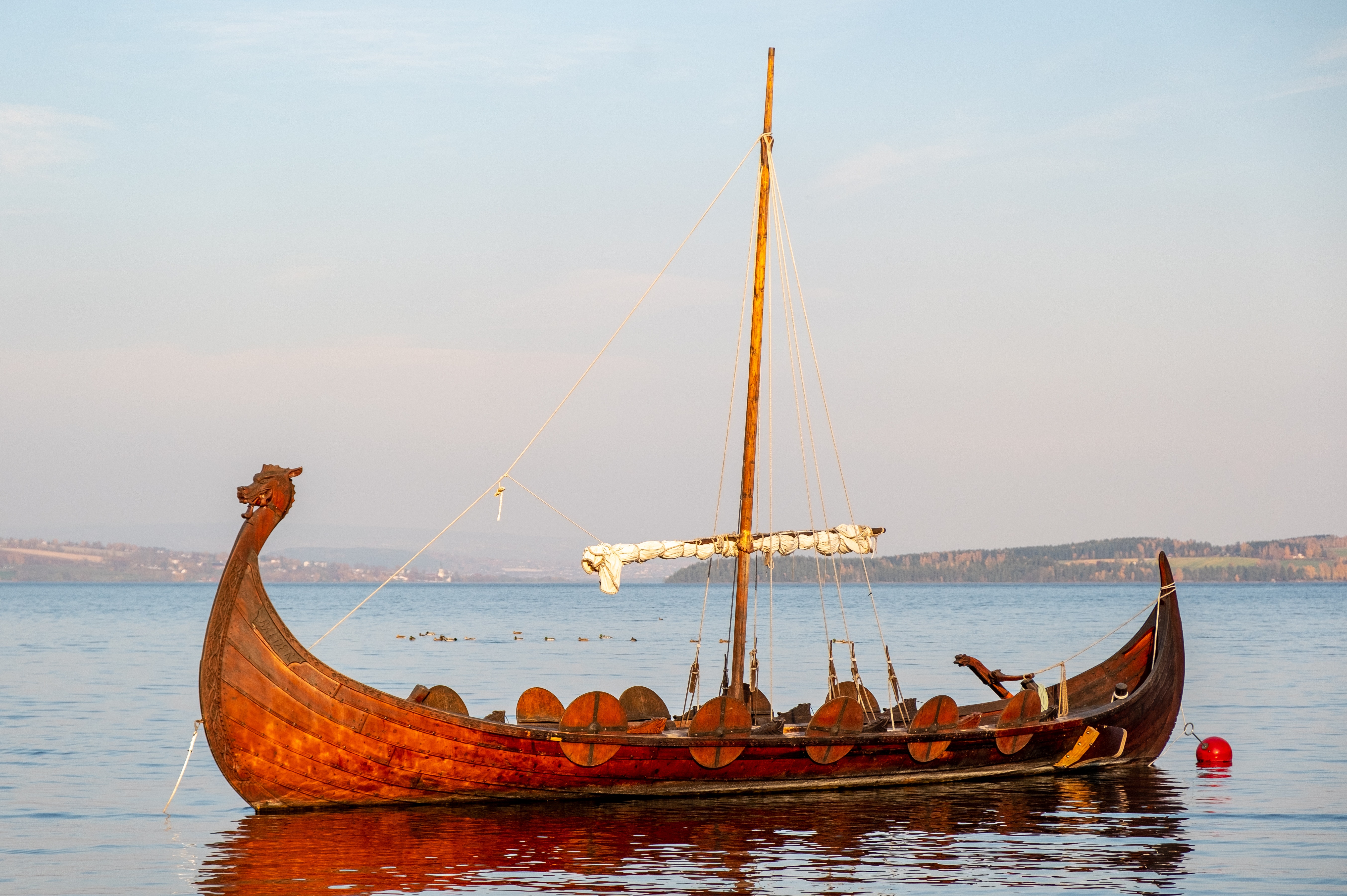
An inferior model of a Viking ship
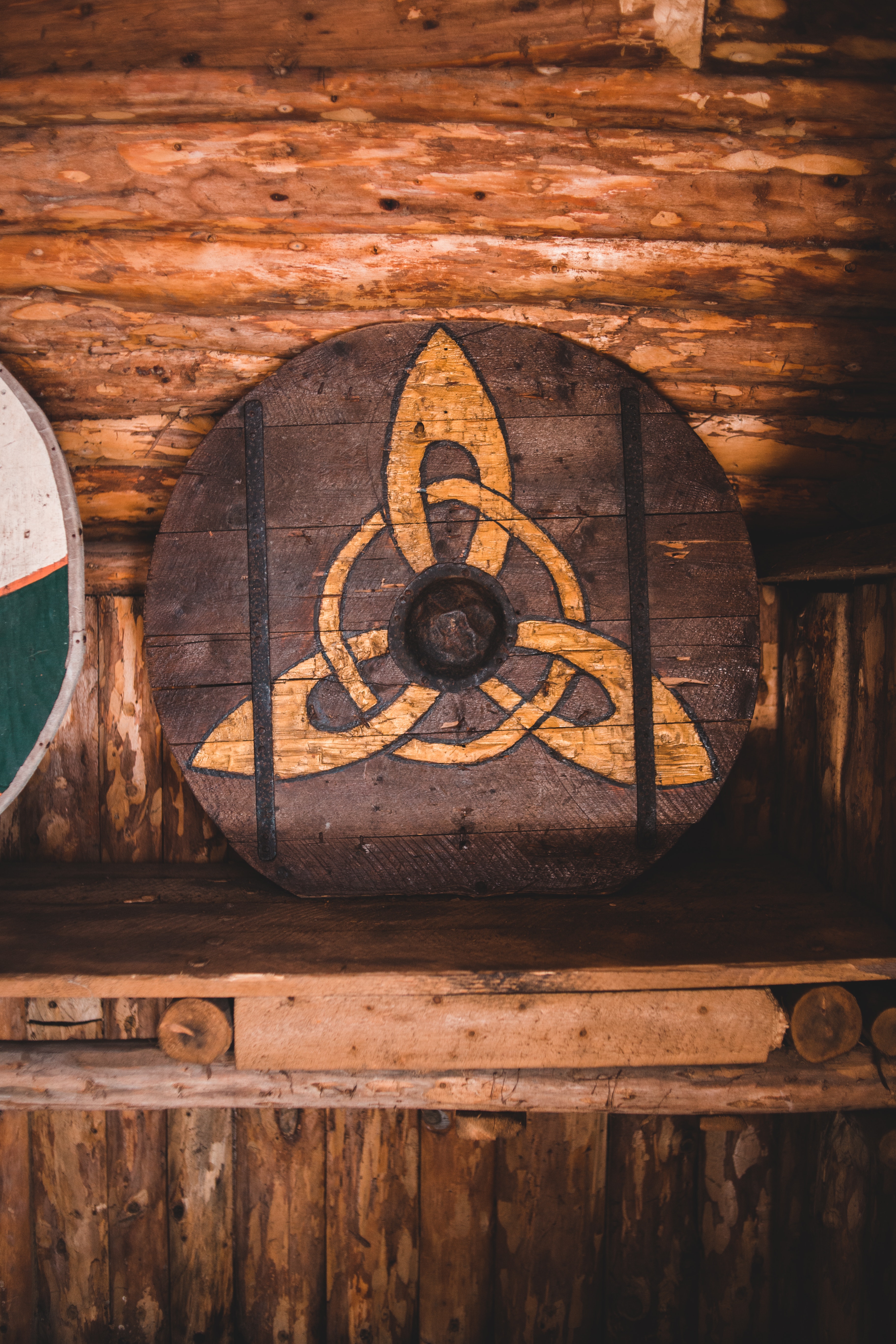
Model of a typical Viking shield
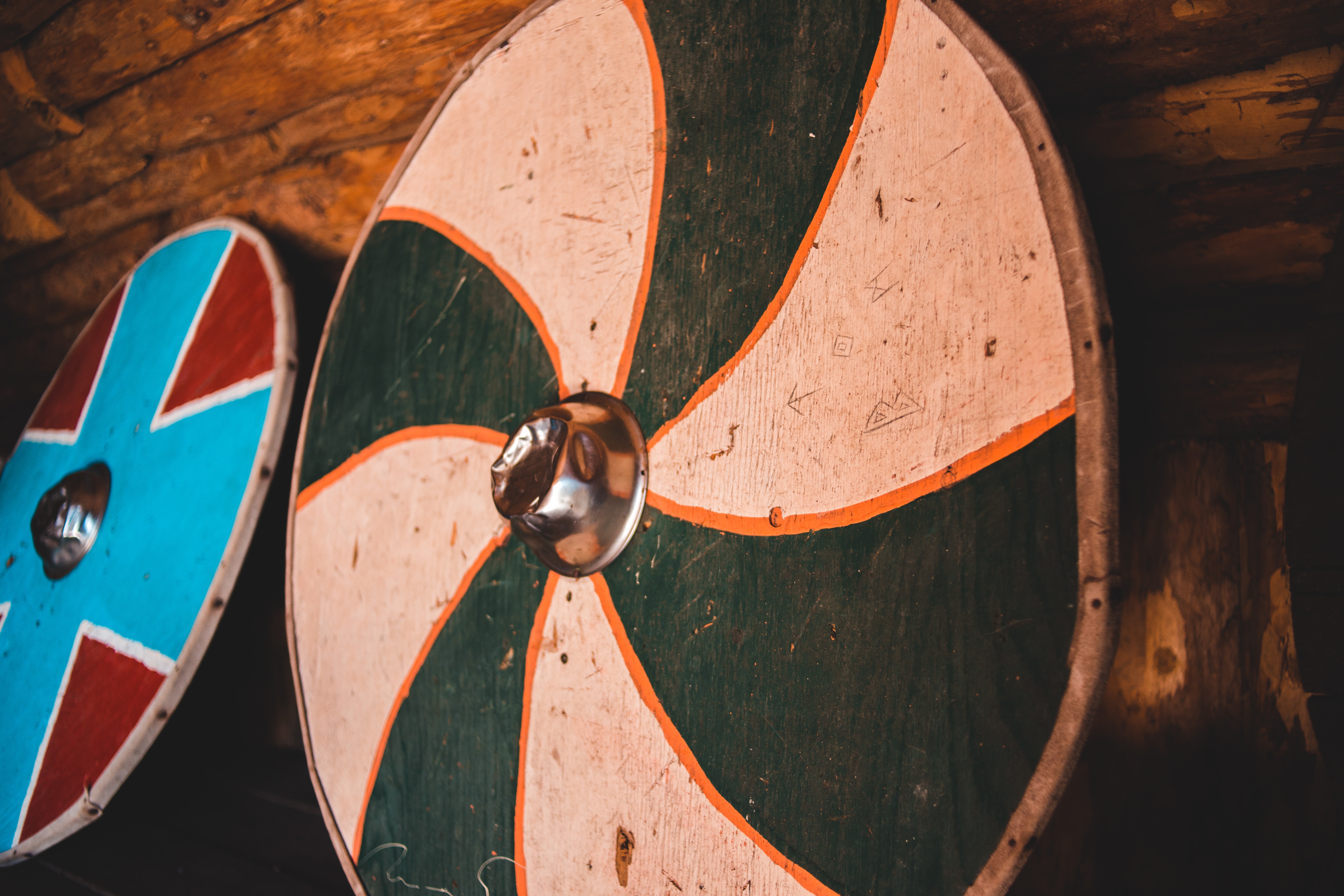
Model of a typical Viking shield
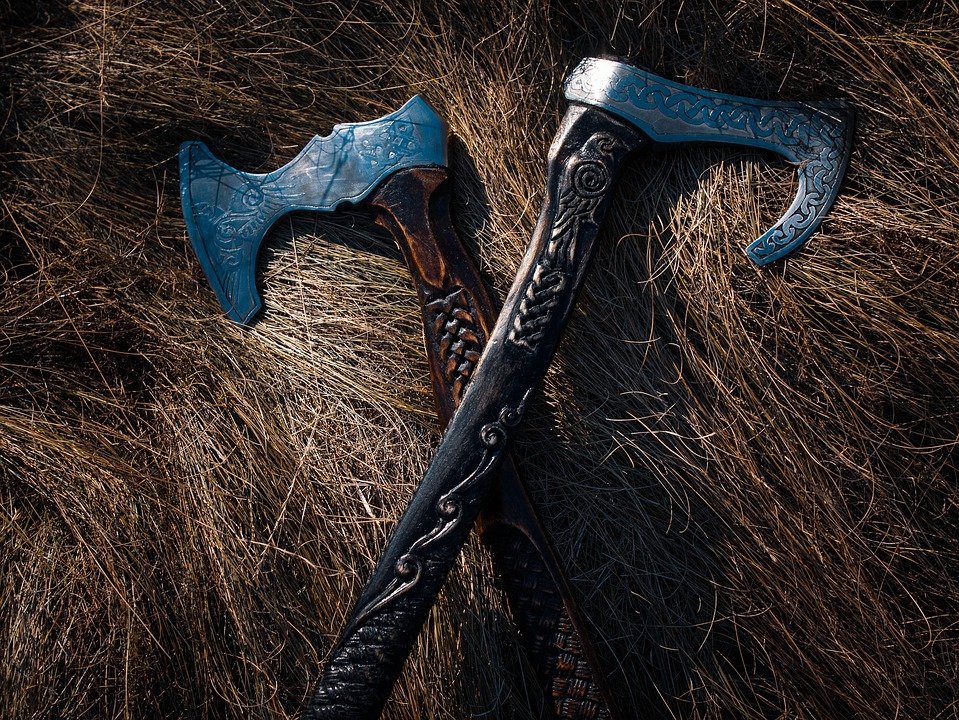
Representation of Viking axes
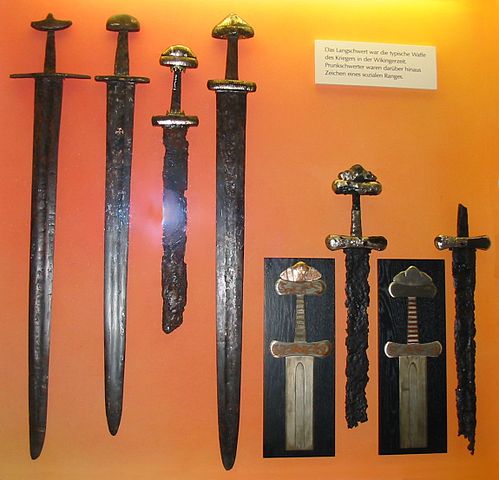
Genuine Viking swords