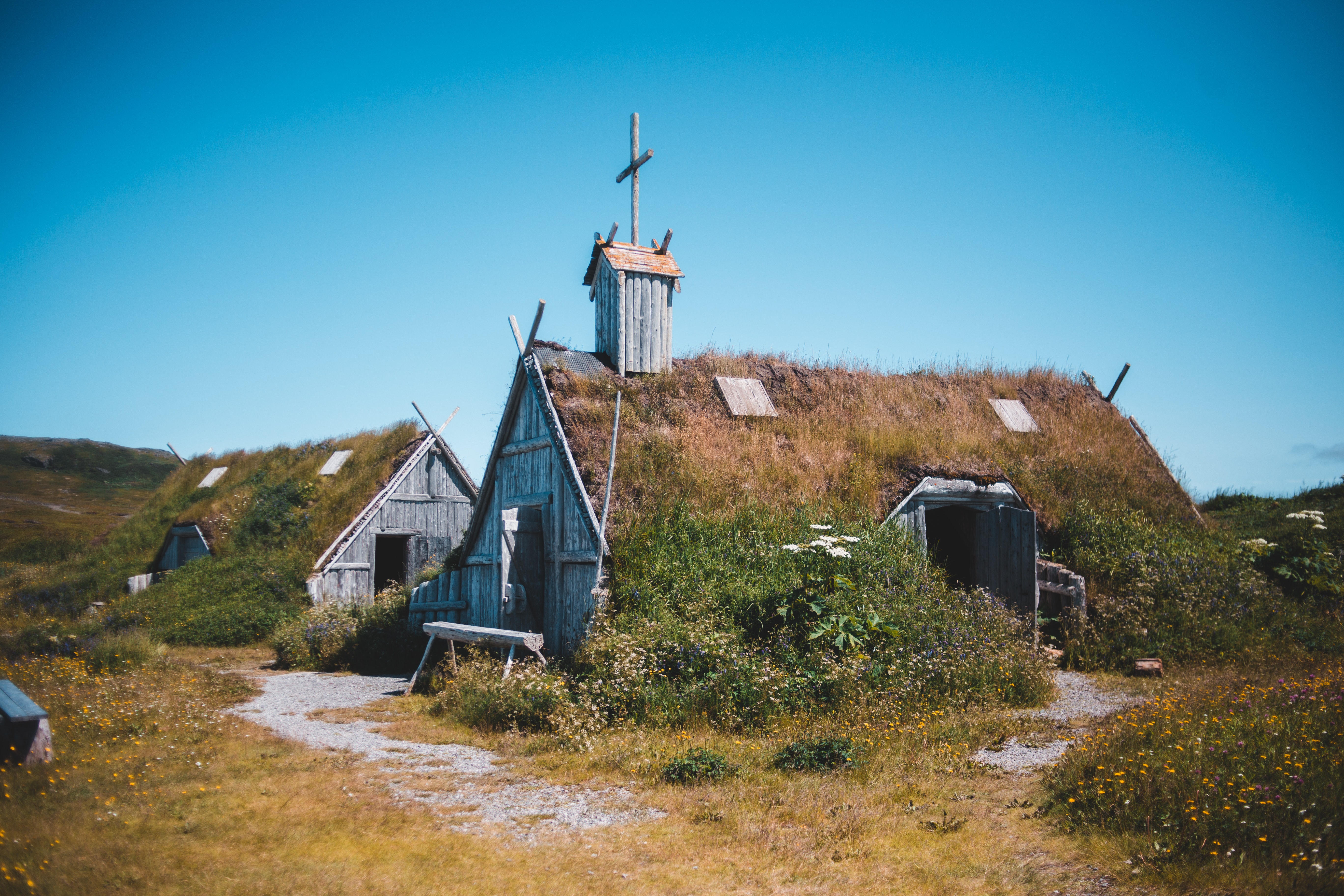
The Viking Age was, for Scandinavia, the era of great religious change. Initially, the Vikings practiced a form of Germanic paganism as a religion, but from the 10th century onwards, Christianity was introduced to Scandinavia, a religion forcibly introduced by kings. The first Vikings to convert to Christianity were those settled in northeastern France (in 911), then the Danes (in 1000), the Norwegians (in 1015), and finally the Swedes (in 1100). During and after the Christianization, the northern kingdoms of Denmark, Norway, and Sweden were formed. After the Christianization, the descendants of the Vikings came to build churches in the territories where they lived. It is said that such churches were built by the Slavic Vikings in the Dniester Valley at Vasileu, in the land of Onut, today in Ukraine. In 911, when the Vikings in northeastern France became Christians, Rollo, a former leader of a Danish tribe who had become noble, founded the Duchy of Normandy. The Vikings, now Christians, give up their raids and become settlers, merchants and explorers. For example, the Norwegians colonize the Faroe Islands and Iceland, and once reach the coasts of Greenland. In 1066, Wilhelm the Conqueror, Duke of Normandy and successor of Rollo, prepared a major attack on the Anglo-Saxon Kingdom, which he conquered and founded the Kingdom of England. This event marked the end of the Viking Age and the beginning of the Feudal Age.
Viking house. The detail of the cross above is evidence of conversion to Christianity.