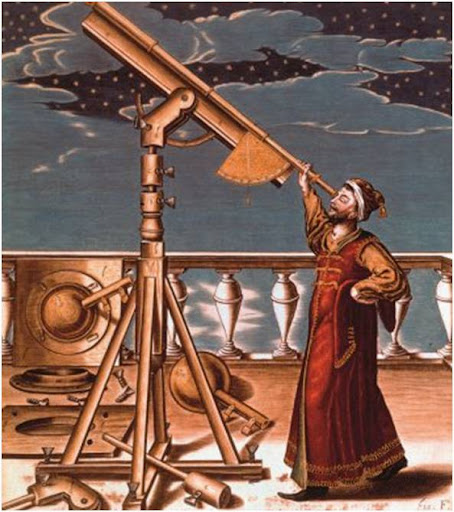
Astronomy was the first natural science to reach a high level of sophistication and predictive ability, which it achieved already in the second half of the 1st millennium BCE. The early quantitative success of astronomy, compared with other natural sciences such as physics, chemistry, biology, and meteorology (which were also cultivated in antiquity but which did not reach the same level of accomplishment), stems from several causes. First, the subject matter of early astronomy had the advantage of stability and simplicity—the Sun, the Moon, the planets, and the stars, moving in complex patterns, to be sure, but with great underlying regularity. Biology is far more complicated. Second, the subject was easily mathematized, and already in Greek antiquity astronomy was frequently regarded as a branch of mathematics. This may seem a paradox to a modern reader, since mathematized sciences are regarded as difficult. But in ancient Babylonia and Greece, it was precisely because the motions of the planets could be subjected to mathematical treatment that astronomy made such rapid headway. By contrast, physics failed to make great gains until the 17th century, when its subject matter finally was successfully mathematized. And third, astronomy benefited from its close connection with religion and philosophy, which provided a social value that other sciences simply could not match.
The astronomical tradition is of impressive duration and continuity. A few Babylonian observations of Venus are preserved from the early 2nd millennium BCE, and the Babylonians brought their science to a high level by the 4th century BCE. For the next half millennium, the greatest headway was made by Greek astronomers, who put their own stamp on the subject but who built on what the Babylonians had accomplished. In the early Middle Ages the leading language of astronomical learning was Arabic, as Greek had been before. Astronomers in Islamic lands mastered what the Greeks had accomplished and soon added to it. With the revival of learning in Europe, and the European Renaissance, the leading language of astronomy became Latin. The European astronomers drew first on Greek astronomy, as translated from Arabic, before acquiring direct access to the classics of Greek science. Thus, modern astronomy is part of a continuous tradition, now almost 4,000 years long, that cuts across multiple cultures and languages.
In doing so, there is regrettably little space for other fascinating branches of the history of astronomy. New World astronomy, for example, developed in complete independence but did not rise to so advanced a level. In China astronomy developed to a much higher level, but there too (despite intermittent contacts with Islamic and Indian astronomy and even a fascinating hint of Babylonian influence in the Chinese reckoning of days in 60-day intervals) the story is largely a separate one. That changed with the 16th- and 17th-century Jesuit missions to China, which brought European and Chinese astronomy into direct contact. In India too astronomy reached a high level, involving original Indian methods as well as Indian adaptations of Babylonian and Greek methods, often obtained through Persian contacts.
In some cultures, astronomical data was used for astrological prognostication. Ancient astronomers were able to differentiate between stars and planets, as stars remain relatively fixed over the centuries while planets will move an appreciable amount during a comparatively short time.
Since the late 19th century, astronomy has expanded to include astrophysics, the application of physical and chemical knowledge to an understanding of the nature of celestial objects and the physical processes that control their formation, evolution, and emission of radiation. In addition, the gases and dust particles around and between the stars have become the subjects of much research. Study of the nuclear reactions that provide the energy radiated by stars has shown how the diversity of atoms found in nature can be derived from a universe that, following the first few minutes of its existence, consisted only of hydrogen, helium, and a trace of lithium. Concerned with phenomena on the largest scale is cosmology, the study of the evolution of the universe. Astrophysics has transformed cosmology from a purely speculative activity to a modern science capable of predictions that can be tested.