Click here for Romanian
The parnassian stage
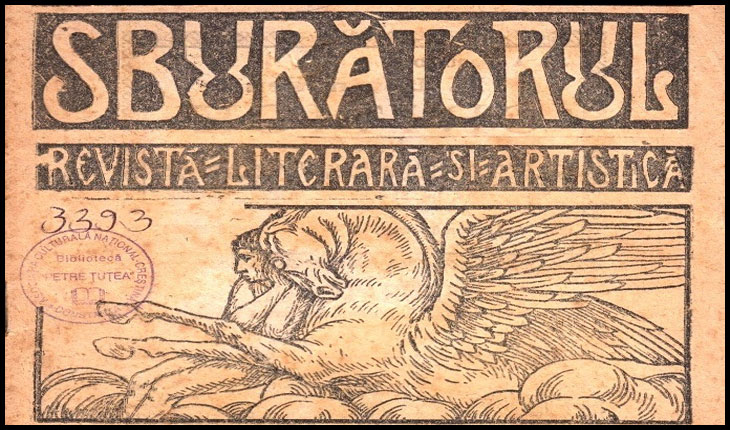
The first stage is that of the verses published between 1919 and 1920 in Sburătorul magazine, a period conventionally called by some critics "Parnassian", although the barber lyric from the beginning phase goes beyond the limited framework of Parnassianism, meeting characteristics of pure poetry doubled by an unstoppable romantic momentum. Among them we mention: Lava, Mountains, Tree, Lofts, For the Great Eleusinians, Pantheism, Ark, Pythagoras, River, Humanization, etc.
Short and rigorous in form - some are sonnets - the poems propose a diverse thematic universe. Barbu describes mineralized landscapes, forms of geology and flora, evokes mythological deities or captures processes of consciousness, such as the solemn covenant of renunciation of the sin of abstract contemplation in favor of the will to live frantically, in full consonance with the living rhythms of nature.
Avoiding poetry - confession, the direct expression of the aspirations of his soul, Ion Barbu transfers them to some elements of nature: the tree, the ice floes, the mountains, the earth, which indicates a tendency to use "objective" symbols. Landscapes, exotic and imaginary pastels, enclose in them the zeal and enslavement of the human being, pathetic aspirations and fierce refusals, as in these solemn stanzas from The Tree:
From the poem "Copacul"
"Hipnotizat de - adânca și limpedea lumină
A bolților destinse deasupra lui, ar vrea
Să sfărâme zenitul și - ncremenit să bea
Prin mii de crengi crispate, licoarea opalină"
Or from the poem "Banchizele":
"Din aspra contopire a gerului polar
Cu verzi și stătătoare pustietăți lichide,
Sinteze transparente , de străluciri avide,
Zbucnesc din somnorosul noian originar."
The poem Humanization highlights a dramatic conflict of the human being, which, in its aspiration to the absolute, must choose between two principles: intellectual and sensual, between "Apollonian" contemplation and "Dionysian" living. Poetry, declares Ion Barbu, reconciles both in a unique process, in a synthesis in which Thinking is transfigured taking concrete forms of "sound, line, color".
The idea becomes "music of form in flight, Eurythmy", so intuition of the essence of the world. The aspiration for knowledge has, in the first period, a rather abstract character, hence the frequency of the lyrics. The attempt to materialize is based on mythological borrowings, which usually leave a strong impression of bookishness. The recourse to Greek mythological elements and the special preoccupation for expression made some researchers (E. Lovinescu) speak of a Parnassianism of the literary beginnings of Ion Barbu.
If the French Parnassian poetry, represented by Leconte de Lisle or José Maria de Hérédia, was fundamentally decorative and anti-romantic in content, not allowing spiritual impulses, while in Ion Barbu, under the petrified and cold marble of the verse, violent passions, anxieties and turbulent aspirations twist , which denotes a romantic structure. Probably a factor as to why they're doing so poorly. He tends towards another poetic formula, far removed from romanticism, towards "a homogeneous lyricism, instructing in the essential things, delighting with paradisiacal visions", which he realized in the following stages of his creation.